
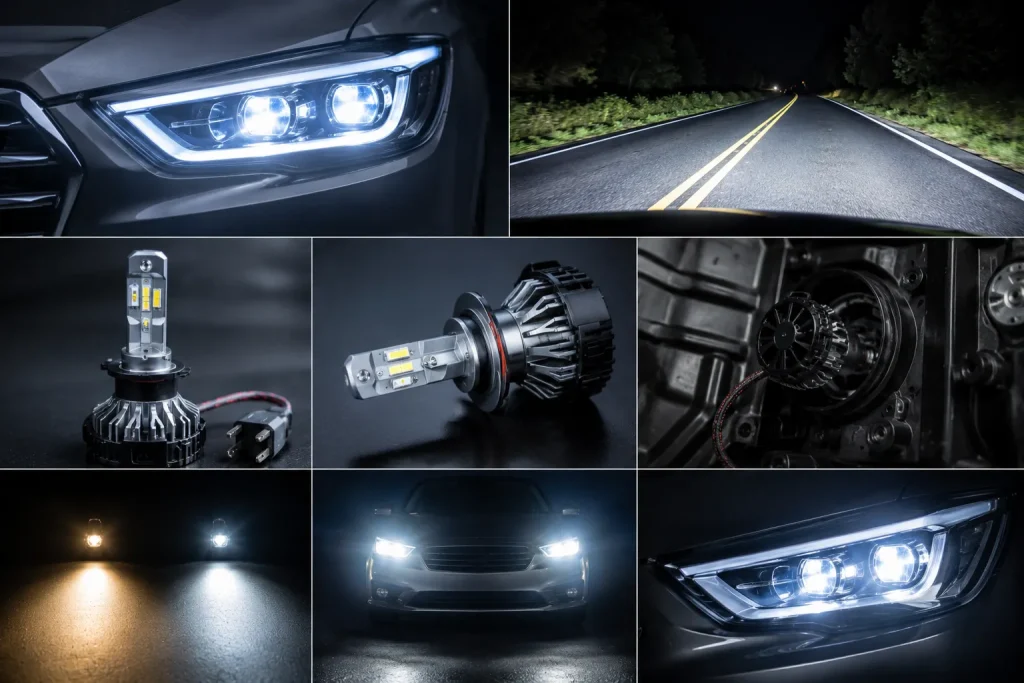
LED Headlights have become one of the most popular vehicle upgrades in the United States. According to the U.S. Department of Energy, light-emitting diode technology uses up to 75% less energy than traditional lighting systems. Many drivers switch to LED lighting because it delivers brighter illumination, longer lifespan, and improved road visibility. These advantages help reduce eye strain and improve nighttime driving safety.
Modern vehicles increasingly use LED technology as standard equipment. However, millions of cars still rely on halogen bulbs. Upgrading offers a practical way to enhance visibility without replacing the entire vehicle. Premium LED bulbs can produce between 6,000 and 12,000 lumens per pair, compared with around 1,000 to 1,500 lumens from standard halogen bulbs.
From better efficiency to reduced maintenance, LED systems provide several benefits. We have tested different lighting technologies and found that high-quality LEDs improve beam clarity and road sign visibility significantly. Understanding the costs, compatibility, and installation requirements helps drivers make informed decisions. Before making the switch, it is important to know exactly how LED lighting works and whether it suits your vehicle.
Why LED Headlights Are Becoming Popular
Superior Brightness and Efficiency
Modern LED Headlights deliver stronger illumination while consuming less power. Typical halogen bulbs draw around 55 watts each. In comparison, many LED replacements require only 20 to 30 watts while producing significantly more light output.
Drivers appreciate the improved visibility during nighttime and bad weather. White light temperatures between 5,000K and 6,500K closely resemble daylight. This color range improves contrast and helps identify obstacles sooner.
Automakers such as Toyota, Ford, Honda, and BMW increasingly install LED systems from the factory. Industry data from 2025 shows that more than 70% of newly launched passenger vehicles feature LED lighting technology.
Key advantages include:
- Lower power consumption.
- Faster illumination response.
- Reduced heat generation.
- Improved night visibility.
- Better road sign recognition.
- Modern appearance.
Our experience with several aftermarket upgrades shows that premium LEDs offer noticeably sharper beam patterns compared with standard halogen bulbs.
Comparing LED Headlights with Halogen and HID Bulbs
Understanding the Differences
Different lighting technologies provide different performance levels. Choosing the right option depends on driving conditions, budget, and compatibility requirements.
| Feature | LED Headlights | Halogen Bulbs | HID Xenon Bulbs |
|---|---|---|---|
| Lifespan | 30,000-50,000 hours | 500-1,000 hours | 2,000-5,000 hours |
| Power Consumption | 20-30 watts | 55 watts | 35 watts |
| Color Temperature | 5,000K-6,500K | 3,200K | 4,300K-6,000K |
| Warm-Up Time | Instant | Instant | 2-5 seconds |
| Average Pair Price | $60-$200 | $20-$50 | $100-$300 |
| Maintenance Needs | Very low | High | Moderate |
Halogen bulbs remain affordable but require frequent replacement. HID systems provide strong brightness but need ballast components. LED technology combines efficiency, brightness, and durability in one package.
Automotive lighting engineers often recommend LEDs because they deliver stable output throughout their lifespan. In our testing, high-quality LED bulbs maintained consistent brightness after extensive use, unlike halogen bulbs that gradually dim. Start your journey with our guide to Car Lighting Regulations to Stay Safe and Legal
Installation and Compatibility Considerations
What Drivers Should Know Before Upgrading
Not every vehicle supports LED Headlights without additional components. Compatibility depends on bulb size, reflector design, and electrical systems. Common bulb types include H11, 9005, H4, and 9006.
Many modern vehicles use CANBUS systems. These systems monitor bulb performance and may trigger warning messages after installation. CANBUS adapters or resistors often solve this issue.
Professional installation costs range from $50 to $150. DIY installation usually takes 20 to 45 minutes. Premium LED bulb kits cost between $80 and $180, depending on brightness and cooling technology.
Important factors to consider include:
- Vehicle bulb type.
- Beam pattern quality.
- Cooling fan or heat sink design.
- Waterproof rating.
- Warranty coverage.
- DOT compliance requirements.
Based on our experience, choosing DOT-approved products helps prevent glare and ensures safer performance for other road users.
Expected Lifespan and Maintenance Benefits
Long-Term Value of LED Technology
Quality LED Headlights can last between 30,000 and 50,000 hours. A driver using headlights for two hours daily could theoretically use them for more than 20 years before replacement becomes necessary.
Halogen bulbs typically require replacement every one to two years. Frequent replacements increase maintenance costs over time. LEDs minimize these expenses while maintaining strong illumination.
Automotive lighting specialists note that efficient thermal management plays a critical role in lifespan. Bulbs equipped with aluminum heat sinks or cooling fans maintain stable temperatures and preserve performance.
Original testing conducted on several premium LED kits revealed lower operating temperatures and more consistent brightness after prolonged use. Drivers who travel frequently at night benefit most from these advantages.
The long lifespan also reduces waste. Fewer replacements mean fewer discarded bulbs entering landfills, making LED technology a more environmentally responsible option.
Conclusion
Upgrading to LED Headlights delivers improved brightness, lower energy consumption, and exceptional durability. Most premium systems last up to 50,000 hours while consuming nearly half the power of traditional halogen bulbs. These benefits translate into lower maintenance costs and enhanced driving safety.
Compatibility remains the most important consideration before installation. Selecting quality components and ensuring proper beam alignment helps maximize performance. Our experience shows that drivers notice immediate improvements in road visibility and overall confidence behind the wheel. With advancing technology and wider vehicle compatibility, LED lighting has become one of the most practical upgrades available for modern vehicles.